Full Plate, Empty Shelves: Untangling Your Relationship with Food When the System Was Never on Your Side
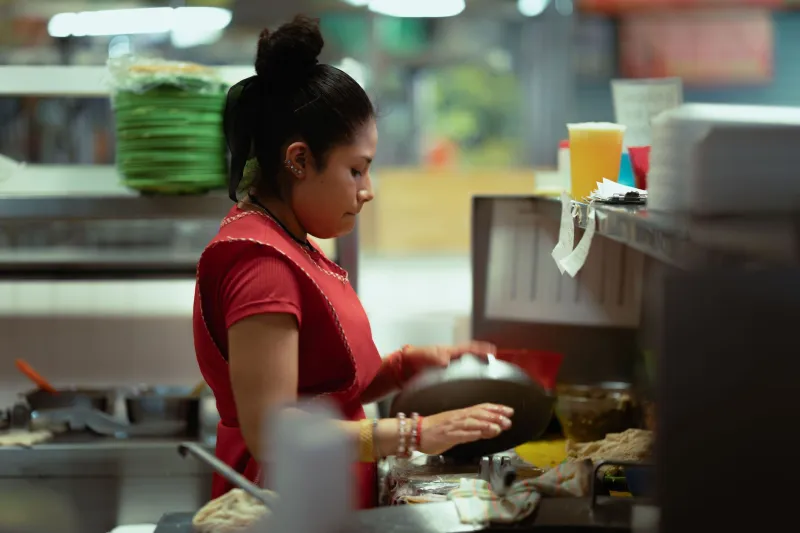
Wellness culture loves a clean narrative. Eat whole foods. Cut the processed stuff. Listen to your body. Simple, right? Except that narrative was written without you in mind. It was written without the reality of food deserts, without the memory of scarcity, without the cultural weight of what food means in communities where it has historically been one of the few reliable sources of joy, connection, and comfort. It was written without the complicated math of feeding a family on a budget that doesn't have room for $9 cold-pressed juice.
For women of color in the United States, the relationship with food is never just about food. It's layered with history, geography, economics, trauma, and a wellness industry that is very good at selling solutions while refusing to acknowledge the systems that created the problem.
Let's talk about all of it.
The Geography of What's Available
The term "food desert" has been in circulation for decades, but researchers and community advocates have increasingly shifted to a more accurate term: food apartheid. The word "desert" implies a natural phenomenon—something that just happened. "Apartheid" names it correctly: a deliberate result of racist policy, disinvestment, and structural exclusion.
Across the United States, predominantly Black and Latino neighborhoods are significantly more likely to lack access to full-service grocery stores while being oversaturated with fast food chains and convenience stores. This isn't coincidence. It's the downstream effect of redlining, urban disinvestment, and decades of policy decisions that treated communities of color as less deserving of infrastructure.
When wellness influencers talk about "choosing better," they are often talking to an audience for whom those choices are structurally available. For many women of color, the "choice" is between what's accessible, affordable, and time-efficient given the realities of working multiple jobs, navigating unreliable transportation, and managing households with limited resources. That's not a lack of willpower. That's a resource allocation problem created by systems, not individuals.
When Scarcity Gets in Your Cells
Beyond present-day access issues, there's a deeper layer worth examining: the psychological and physiological imprint of historical food insecurity on communities of color.
Research on food insecurity and stress physiology shows that chronic or historical experiences of scarcity can reshape the body's relationship with food at a hormonal level. Elevated cortisol, dysregulated hunger hormones like ghrelin and leptin, and a nervous system primed to treat food availability as unpredictable—these are not moral failures. They are biological adaptations to real conditions.
For many Black women, these patterns are also intergenerational. The ancestors who survived enslavement, sharecropping, and the Great Migration developed survival relationships with food that were entirely appropriate to their circumstances. Some of those patterns—eating quickly, finding fullness in calorie-dense foods, treating abundance as something to be used rather than saved—were passed down through family culture and, according to epigenetic research, potentially through biology as well.
Diet culture, which has never once acknowledged this history, then shows up and calls those patterns "bad habits."
What the Wellness Industry Sells vs. What It Offers
Here is the particular cruelty of the current wellness landscape for women of color: it has become increasingly good at using the language of empowerment while continuing to sell shame.
"Clean eating" implies that other eating is dirty. "Food freedom" costs $97 a month for the online program. Intuitive eating—a genuinely valuable framework—is often taught without any acknowledgment that trusting your hunger cues is significantly harder when your relationship with food has been shaped by scarcity, stress, and diet cycling since childhood. The $14 smoothie bowl is presented as self-care without any interrogation of who can afford to care for themselves that way.
None of this means that nutritional wellness isn't worth pursuing. It absolutely is. But it means that the framework has to start from a different place—one that acknowledges structural reality, honors cultural food traditions, and refuses to attach moral value to eating choices.
Building Food Sovereignty on Your Own Terms
Food sovereignty—the right to define your own relationship with food in ways that center your culture, your budget, your body, and your values—is both a political concept and a deeply personal practice. Here's what it can look like in real life:
Reclaim cultural food as nourishment, not a guilty pleasure. The idea that traditional foods from communities of color are inherently less healthy than the foods centered in mainstream wellness culture is both factually questionable and culturally violent. Beans and rice, collard greens slow-cooked with smoked meat, tamales, jerk chicken, injera—these are nutrient-dense, culturally rich foods that deserve to be on the table without apology or modification to meet someone else's standard of "clean."
Work with your actual budget, not an aspirational one. Frozen vegetables are nutritionally comparable to fresh. Dried beans are one of the most affordable, protein-rich foods available. Eggs are inexpensive and versatile. Canned fish is a legitimate pantry staple. Wellness on a real budget is possible—but it requires rejecting the premise that health requires expensive specialty items.
Explore community food resources without shame. Food pantries, community fridges, WIC, SNAP, community gardens, food co-ops—these are resources that exist because food access is a systemic issue, not a personal failure. Using them is practical, not shameful.
Practice gentle nutrition over rigid rules. Rather than categorizing foods as good or bad, consider what different foods offer: energy, pleasure, cultural connection, convenience, comfort. All of these are legitimate nutritional considerations. A diet that includes joy is more sustainable than one built on restriction.
Notice diet culture when it shows up. It will show up—in your social media feed, in well-meaning comments from family members, in the way you talk to yourself after eating certain things. Building awareness of these messages is the first step to choosing not to internalize them.
Hunger Is Not the Problem
You were not born with a broken relationship with food. That relationship was shaped by systems, history, stress, and an industry that profits from your dissatisfaction. Untangling it isn't about finding the perfect eating plan. It's about slowly, persistently building a relationship with food that belongs to you—one that honors where you come from, works within the reality of your life, and refuses the premise that your worth is measured by what's on your plate.
Your hunger is valid. Your history is real. And your path to nourishment gets to be defined entirely by you.