When the Wellness Industry Leaves You Out, You Build Your Own Table
Let's be honest about something. The wellness industry — with its $4.5 trillion global market, its gleaming studios, its Instagram-perfect nutritionists — was not built with us in mind.
For women of color in the US, accessing quality health and fitness resources has always come with a catch. The gym is too expensive, too far, or too unwelcoming. The nutritionist doesn't understand your food culture. The therapist's waitlist is six months long. The fitness influencer telling you to "just move your body" has never had to choose between a gym membership and a utility bill.
So what do you do when the system doesn't work for you?
You build something that does.
What DIY Wellness Actually Looks Like
Forget the polished version of community wellness you might see packaged and sold online. What's happening on the ground is scrappier, more honest, and far more powerful.
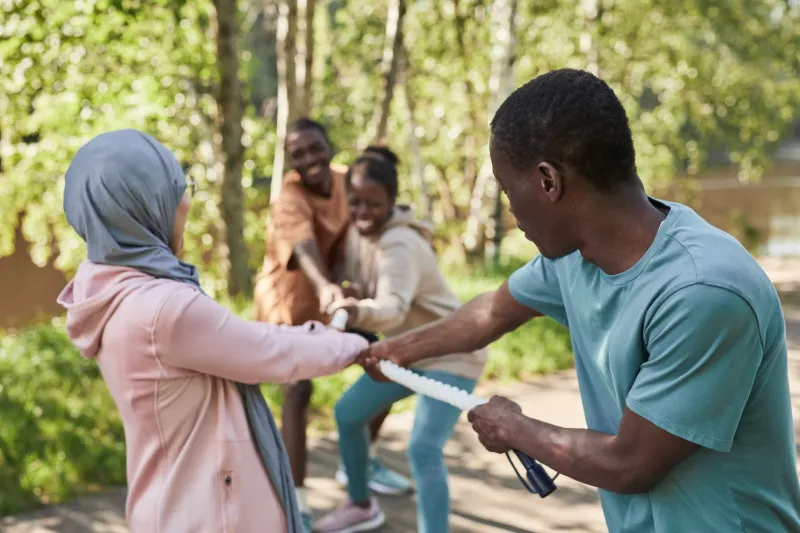
In Houston, a group of Latina women in their 40s and 50s started meeting in a church parking lot every Saturday morning after a friend mentioned she couldn't afford a gym membership. That was three years ago. Today, their group has 30 members, a shared Google Drive full of workout videos, and a rotating meal prep exchange where everyone brings a dish based on their cultural background — no food shame, no calorie counting, just real food and real community.
In Detroit, a Black woman named Tasha started a private Facebook group for women navigating chronic illness and weight management without access to specialists. She's not a doctor. She's someone who spent years being dismissed by hers and decided to start pooling knowledge with other women who'd had the same experience. The group now has over 2,000 members who share lab result interpretations, medication questions, and emotional support in a space that feels nothing like a clinical setting.
These aren't outliers. They're a movement.
The Gap That Made This Necessary
To understand why these communities exist, you have to understand the depth of the gap they're filling.
In the US, women of color face a compounding set of barriers to wellness access. Cost is the most obvious one — gym memberships, therapy, quality produce, and preventive healthcare all carry price tags that are disproportionately difficult for communities that have faced generations of wage gaps and economic exclusion.
But cost isn't the only barrier. There's also cultural competency — or the total lack of it. A wellness space that doesn't understand the significance of food in Black and Latinx culture, that can't pronounce the name of a traditional dish, that treats your body as a problem to be fixed rather than a life to be supported — that space is inaccessible even when it's technically affordable.
And then there's the emotional tax of existing in spaces that weren't built for you. The micro-aggressions. The tokenism. The exhaustion of being the only one in the room who looks like you.
DIY wellness communities don't just solve the access problem. They solve the belonging problem.
The Power of Shared Knowledge
One of the most underappreciated aspects of these grassroots networks is the quality of information flowing through them. These aren't spaces where misinformation runs unchecked — they're spaces where women with lived experience, and often professional credentials that the mainstream ignores, are sharing real, practical knowledge.
Midwives, community health workers, certified trainers, registered dietitians, and licensed therapists who are women of color are frequently the backbone of these informal networks. They show up in group chats, community centers, and social media lives — often for free or at a sliding scale — because they understand what it means to be failed by a system and want to offer something different.
This is peer health education in its most authentic form. And research supports its effectiveness: studies consistently show that health information delivered within a trusted community context is more likely to be acted upon than information delivered in a clinical setting by a provider who doesn't share your background.
How to Find Your People — Or Start Your Own Network
If you're looking to plug into a DIY wellness community, start local. Check neighborhood Facebook groups, community center bulletin boards, and Black- or Latina-owned fitness studios in your area. Many of these spaces host free or low-cost events specifically designed to build community.
Digitally, look for private groups centered on specific health experiences — chronic illness, postpartum recovery, menopause, mental health — rather than generic wellness spaces. The more specific, often the more supportive.
And if you can't find what you're looking for? Consider starting it yourself. You don't need credentials or a budget. You need a group chat, a consistent meeting time, and a commitment to showing up. That's genuinely how most of these communities started.
A few things that make DIY wellness communities work:
- Shared ownership — everyone contributes, no one is the authority
- Cultural fluency — food, language, and lived experience are honored, not erased
- Low barriers — free or sliding scale, accessible location or virtual option
- Clear purpose — whether it's movement, nutrition, mental health, or all three, a focused intention keeps things grounded
- Psychological safety — the ability to show up imperfect and still belong
This Is Radical, and It's Also Just Practical
There's something quietly revolutionary about women of color refusing to wait for systems that have historically excluded them. But it's also just deeply practical. When the table isn't set for you, you set your own.
The wellness industry will eventually catch up — it always does, usually once there's money to be made. But by then, these communities will have already built something that can't be packaged or sold: a genuine ecosystem of care, built by and for the people who needed it most.
That's not a backup plan. That's the future of wellness.