Before You Even Lace Up: The Hidden Tax Women of Color Pay Just to Work Out
Let's be real for a second.
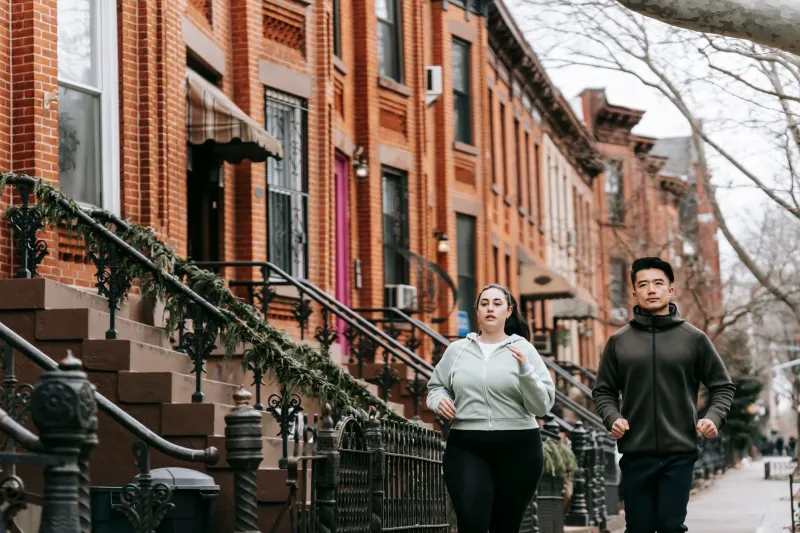
While some people are just thinking about whether to hit the gym before or after work, a lot of us are running a whole separate calculation in our heads. Is this neighborhood safe to run in after dark? Will there be other Black women at that gym? What happens if someone clutches their bag when I walk through the locker room? What do I do if someone asks to touch my hair mid-deadlift?
This is the invisible tax. And it is exhausting.
It doesn't show up in your fitness tracker. It doesn't get counted in your calorie burn. But it is real, it is labor, and it is costing women of color something that no recovery protocol can fully restore.
The Calculus Nobody Talks About
Dr. Monnica Williams, a clinical psychologist who has studied race-based trauma, describes hypervigilance as the body's learned response to repeated experiences of threat — real or anticipated. For women of color in the United States, that threat doesn't clock out when you put on your running shoes. It follows you down the trail. It sits next to you in the spin class. It watches you from across the weight room floor.
This hypervigilance isn't paranoia. It's pattern recognition built from lived experience. A 2021 study published in the American Journal of Preventive Medicine found that Black women are significantly less likely to use outdoor recreational spaces than white women — and perceived safety was one of the top reasons cited. Not fitness level. Not interest. Safety.
Think about what that means. We are being edged out of our own wellness before we even get started.
For many women, the calculation goes something like this: What time of day is safest? Which route has the most foot traffic? Is this a neighborhood where I'll get followed by a security guard? If I wear headphones, will I miss something I need to hear? If I go alone, who knows where I am?
And for those choosing indoor spaces — gyms, studios, recreation centers — the math doesn't get easier. It just changes variables. Will the staff greet me the way they greet everyone else? Will someone assume I'm lost? Will my workout be interrupted by someone who thinks my body is a curiosity or a problem?
Microaggressions Have a Physical Cost
Here's what the wellness industry doesn't want to say out loud: microaggressions are not minor. The prefix is misleading. When you spend an entire workout bracing for a comment, a look, or an interaction that makes you feel like you don't belong, your nervous system is working overtime. Cortisol spikes. Muscles stay tense. The parasympathetic rest-and-digest response — the one your body needs to actually benefit from exercise — never fully kicks in.
This means the workout that was supposed to reduce your stress may actually be adding to it.
Jasmyn, a 34-year-old personal trainer in Atlanta, put it plainly: "I've left gym sessions feeling more wound up than when I came in. Not because of the workout — because of the energy I spent managing how other people were responding to me being there. That's not wellness. That's survival."
She's not alone. Across online communities, in DMs, in conversations between women of color who have finally found each other — this story repeats itself with striking consistency.
The Geography of Safety
Outdoor fitness carries its own particular weight. The murders of Ahmaud Arbery and countless others have made viscerally clear what many Black Americans have always known: moving through public space is not a neutral act. For Black women specifically, the threat matrix includes racial profiling, street harassment, and the very real risk of violence — threats that white women engaging in the same jog simply do not carry.
Latinas, Indigenous women, and Asian American women navigate their own versions of this geography. Anti-Asian hate crimes spiked dramatically during the COVID-19 pandemic, and many Asian American women reported avoiding outdoor exercise entirely during that period. Indigenous women in rural areas contend with high rates of missing and murdered women, making solo outdoor activity a genuine risk calculation, not an abstract one.
This is not a niche issue. This is the lived reality of millions of women who want to be healthy, who deserve to be healthy, and who are forced to spend precious mental energy just to access the basic act of moving their bodies.
Reclaiming the Space Without Abandoning Yourself
So what do you do with all of this? You don't just push through and pretend the tax doesn't exist. But you also don't surrender the joy of movement to systems that were never designed with you in mind.
Here's what some women are doing — and what might work for you:
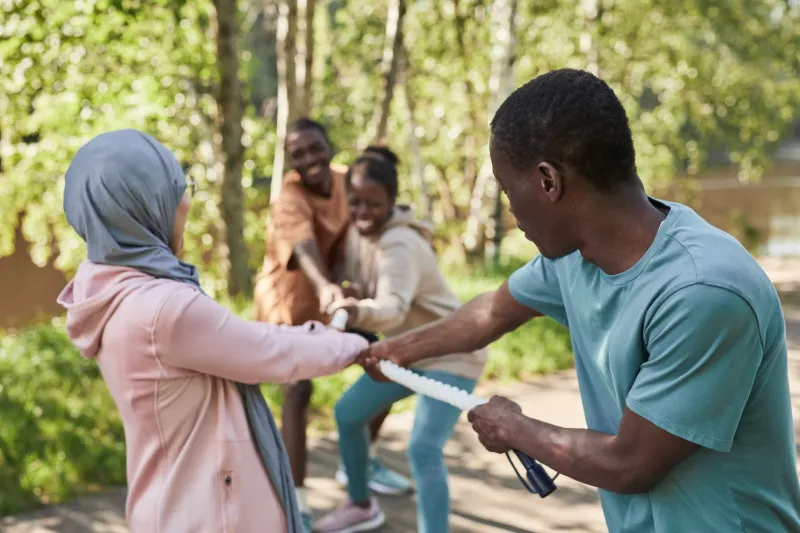
Build your own crew. Running clubs, hiking groups, and workout collectives specifically for women of color are popping up in cities across the country — from Black Girls Run! chapters to Latinx Hikers to Indigenous-led land reconnection groups. There is power in numbers, and there is something deeply healing about moving your body surrounded by people who understand the full weight of what you're carrying.
Vet your spaces before you commit. Before you sign a gym membership, visit during peak hours. Look at who's on staff. Check their social media. Ask questions. A gym that can't tell you about their harassment policy probably doesn't have one worth mentioning. Your money is a vote.
Give yourself permission to leave. If a space consistently makes you feel unwelcome, unsafe, or unseen — you are not obligated to tough it out for the sake of the workout. Your nervous system's assessment of an environment is data. Honor it.
Name what you're carrying. Journaling, therapy, or even just talking to a friend about the mental load of navigating fitness as a woman of color can reduce the weight of it. When we name it, we stop carrying it alone.
Create home-base options. Building a home workout practice — even a minimal one — gives you a baseline that doesn't require running the gauntlet on days when you just don't have the bandwidth. This isn't giving up. This is strategy.
You Deserve to Just Work Out
At the end of the day, this is what we're fighting for: the radical, simple right to move your body without performing a risk assessment first. To show up to a trail or a weight room and just be there — sweaty, strong, present, and free.
That right is worth protecting. And so are you.
The invisible tax is real. But so is your power to decide how much of it you pay — and to build communities where the cost gets shared, challenged, and eventually, dismantled.