Lifting for Yourself: How Women of Color Are Turning Strength Training Into an Act of Self-Love
Let's be honest about what the fitness industry has been selling us.
For decades, the messaging aimed at women—and especially women of color—has been relentlessly appearance-focused. Lift weights to tone up. Squat to get a rounder butt. Build muscle to burn fat faster. The body was always the project. Always something to be fixed, shaped, or shrunk down into something more acceptable.
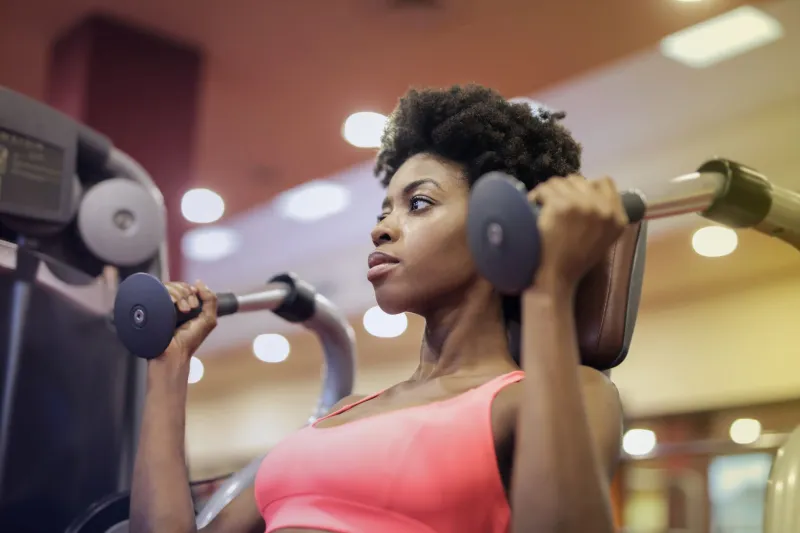
But something is shifting. Quietly at first, then loudly, women of color across the country are walking into gyms, community centers, and home workout spaces with a completely different question on their minds: What can this body do? Not: What will this body look like?
That's not a small distinction. That's a revolution.
When the Mirror Stops Being the Point
Danielle, a 34-year-old nurse and mother of two in Atlanta, started strength training three years ago after her doctor flagged some early warning signs of bone density loss. She'd never considered herself a "gym person." But once she started, something unexpected happened.
"I stopped caring about what I looked like in the mirror pretty quickly," she says. "What I started caring about was that I could carry both my kids at the same time without my back giving out. That I could open a heavy door and not think twice. That I felt capable. Nobody had ever talked to me about fitness that way before."
That shift—from aesthetics to agency—is exactly what embodiment-focused therapists and fitness professionals are increasingly pointing to as a more sustainable, and more healing, relationship with movement.
Dr. Imani Thomas, a licensed psychologist who specializes in body image and trauma in communities of color, explains it this way: "When we attach our motivation to how we look, we're constantly at the mercy of external validation. But when we connect to how we feel—our energy, our power, our capacity—we build an internal relationship with our bodies that's much harder to shake."
For women of color specifically, that internal relationship carries extra weight. Literally and figuratively.
Carrying More Than Weight
Women of color in the US navigate a particular kind of exhaustion. There's the physical kind, sure. But there's also the emotional labor of code-switching, the psychological toll of systemic racism, the generational weight of survival-mode living passed down through families who didn't always have the luxury of thinking about "wellness."
Strength training, for many women in these communities, is becoming a way to process all of that—not just build muscle.
Jasmine, a 28-year-old graphic designer in Chicago, started powerlifting during the pandemic after years of anxiety and burnout. "I needed somewhere to put all this heaviness I was carrying," she says. "And I don't mean that metaphorically—well, I do, but also literally. There's something about picking up something heavy and moving it that makes you feel like you have power in a world that's constantly trying to make you feel powerless."
This isn't just anecdotal. Research on somatic healing—the idea that the body holds and processes emotional experience—supports what Jasmine and women like her are feeling. Movement, particularly resistance-based movement, can help regulate the nervous system, reduce cortisol levels, and rebuild a sense of safety and agency in the body. For communities that have experienced chronic stress and trauma, that's not just fitness. That's healing.
Reclaiming What Was Never Offered to Us
There's also a cultural reclamation happening here that deserves to be named.
Historically, Black and Brown women's physical strength has been exploited, erased, or framed as something unfeminine and undesirable. The image of a strong woman of color has rarely been celebrated—it's more often been used as a justification for demanding more from her while offering less in return. Less care. Less grace. Less rest.
When women of color choose to build strength for themselves—on their own terms, in their own bodies, for their own reasons—that's a reclamation. It's a quiet but powerful statement: My body belongs to me. My strength is mine.
"There's something deeply ancestral about it," says Kezia, a 41-year-old personal trainer and wellness coach in Houston who works primarily with women of color. "Our grandmothers were strong out of necessity. They had to be. But we get to be strong by choice. And that choice changes everything about what strength means."
Kezia talks to her clients a lot about reframing the "why" behind their workouts. Not as a gimmick, but as a genuine practice. "I ask them: if your body looked exactly the same a year from now, would this still be worth it? And when they really sit with that question, most of them say yes. Because they're not actually here for the aesthetics. They're here for how it makes them feel."
Practical Ways to Shift Your Relationship With Strength
If this resonates with you—if you're tired of chasing a body that looks a certain way and ready to chase one that feels a certain way—here are some real, grounded ways to start making that shift:
Track performance, not appearance. Instead of measuring progress with photos or scale numbers, log how much you're lifting, how many reps you're completing, or how your energy feels after a session. Let the numbers tell a story about capability, not aesthetics.
Set strength goals that matter to your actual life. Want to carry groceries up three flights of stairs without stopping? Pick up your niece without straining your back? Hike a trail you've been avoiding? Let those real-life moments be your benchmarks.
Find community that reflects your values. Seek out fitness spaces—online or in person—where women who look like you are celebrated for their power, not just their shape. Representation in fitness isn't a luxury. It's fuel.
Talk to your body like it's on your team. This sounds soft, but it's science-backed. Positive self-talk during exercise has been shown to improve performance and motivation. Try shifting from "I need to fix this" to "I'm building something here."
Let rest be part of the love language too. Strength isn't just built in the gym. It's built in recovery, in sleep, in the moments when you choose not to push through pain. Rest is not the opposite of strength. It's part of it.
Strong Is a Feeling First
The aesthetic results of strength training are real. Muscle definition happens. Posture improves. Clothes fit differently. Nobody's pretending those things don't exist.
But for women of color who have spent years—sometimes decades—chasing a body that the fitness industry told them was the goal, those results can feel hollow if they're the only thing you're after.
What lasts? What actually changes the relationship you have with yourself? It's the moment you realize you're stronger than you were. That you showed up for your body not because you were punishing it or trying to change it, but because you were investing in it. Honoring it. Loving it.
That's the shift. And once you feel it, you don't go back.
Your strength was never just about how you look. It was always about who you're becoming—and sis, she is powerful.