Iron and Identity: How Women of Color Are Using the Weight Room to Rewrite Who They're Allowed to Be
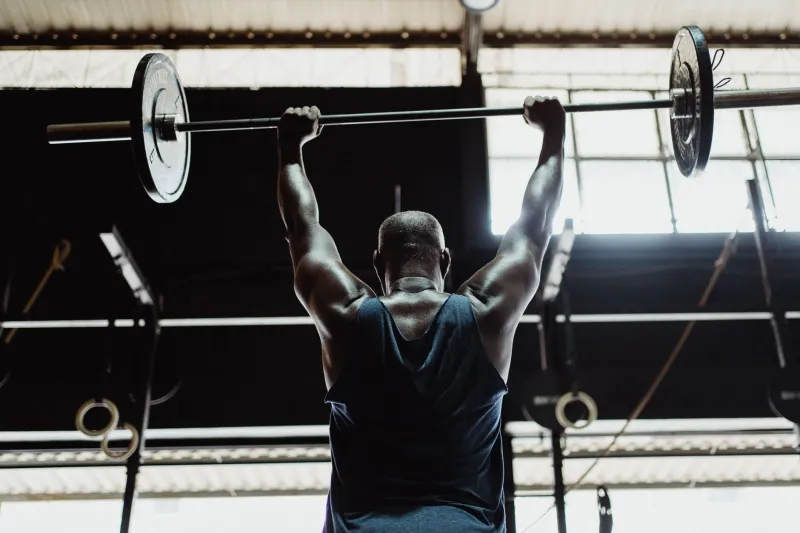
The first time Marisol picked up a barbell, she cried in her car afterward. Not from soreness. From something harder to name.
"I think I just wasn't used to my body doing something powerful," she told me. "I'd spent so many years trying to make it smaller. That day, I made it stronger. It felt like meeting myself for the first time."
Marisol is 34, Dominican-American, and has been lifting for three years. She's not training for a competition. She's not chasing a transformation photo. She's chasing something quieter and more radical — the feeling of being at home in a body she was taught to be at war with.
She's not alone.
What the Mirror Was Taught to Show Us
Beauty standards don't emerge from nowhere. The ones that dominate American culture — thin, light-skinned, straight-haired, small-featured — have roots in colonialism, in white supremacy, in economic systems that profited from making certain bodies feel less valuable than others. That's not hyperbole. That's history.
For women of color, the relationship with the mirror is often complicated before it even begins. We absorb messages about our bodies from family, from media, from school, from the wellness industry itself. Too thick. Too dark. Too much. Not enough. The goal, we're often told in a hundred subtle and not-so-subtle ways, is to move toward something more palatable. More acceptable. More white.
Fitness culture, for much of its mainstream history, has reinforced this. The ideal fitness body was lean, light, and long. Curves were a problem to be solved. Muscle on women was acceptable only in certain doses, on certain body types, with certain aesthetics attached.
Strength training, particularly for women of color, has become one of the most direct challenges to that framework.
Building Up Instead of Shrinking Down
There's a psychological distinction that researchers who study body image have started paying more attention to: the difference between appearance-focused exercise and function-focused exercise. When you work out to look different, your body remains an object — something to be fixed, assessed, judged. When you work out to do something — lift heavier, move faster, recover stronger — your body becomes a subject. An agent. Yours.
For women of color who've spent years in appearance-focused fitness culture, the shift to function-focused training can feel genuinely transformative.
Jasmine, a 29-year-old Black woman from Atlanta, describes it this way: "I used to do cardio for hours because I was trying to burn something off. When I started lifting, I was trying to build something. That's a completely different headspace. You stop asking 'how do I look?' and start asking 'what can I do?'"
That question — what can I do? — is quietly subversive for women who've been culturally conditioned to minimize themselves.
The Colonial Beauty Ideal Has a Body Type
Let's say the quiet part loud: the standard "fitness body" that dominates gyms, magazines, and social media is a racialized construct. It tends to celebrate a very specific silhouette — one that doesn't reflect the natural diversity of Black, Latina, Indigenous, or Asian women's bodies.
When a Black woman with a naturally muscular build starts lifting and her body responds by getting stronger and more defined, she doesn't automatically move closer to that ideal. Often, she moves further from it. And something interesting happens in that gap: she has to choose whether to keep chasing the standard or to redefine what she's chasing.
Many women are choosing the latter.
"I've got hips and a back and arms that look like they work," says Priya, a 37-year-old South Indian-American powerlifter. "I don't look like a fitness influencer. I look like someone who lifts heavy things. And I've had to really sit with whether I think that's beautiful. I do now. But it took work — mental work, not just physical."
Strength as Cultural Reclamation
For many women of color, lifting is also a reclamation of something ancestral. Our grandmothers were strong. Not in the curated, gym-selfie way — in the way of women who worked hard, carried heavy things, and held families together. Strength was never foreign to us. It was just never celebrated in us.
Reconnecting with physical strength can feel like reconnecting with a lineage. It can feel like saying: I come from powerful women, and I am one too.
That's not a small thing. Especially in a culture that has often tried to reframe Black and brown women's strength as aggression, unfemininity, or threat.
The Community That Makes It Possible
None of this happens in a vacuum. Women of color are increasingly finding each other in weight rooms, in online communities, in lifting clubs built specifically for them. Spaces like Black Girls Lifting, Brown Girls Do Lift, and dozens of local collectives are creating environments where the standard isn't set by someone else's ideal — it's set by the community itself.
In these spaces, the conversation isn't about getting smaller. It's about getting stronger, getting healthier, and getting free.
And the mirror? It's starting to show something different. Not a fixed body, but a defined one. Not a corrected body, but a claimed one.
That's the real transformation. And it starts the moment you pick up the bar.