When 'You're So Strong' Becomes a Diagnosis: The Deadly Cost of the Superwoman Myth in Black Women's Healthcare
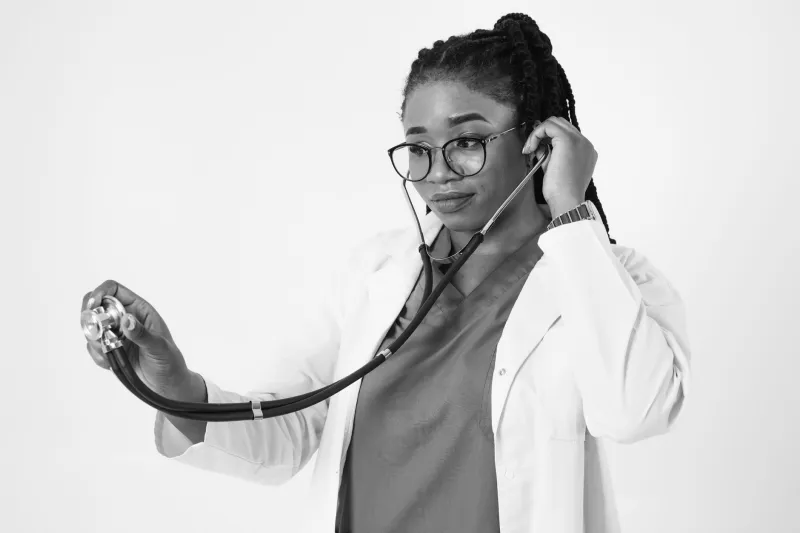
She sat in the ER for six hours before anyone took her pain seriously. She'd described the chest pressure, the shortness of breath, the feeling that something was genuinely wrong. The notes from that visit, which she later obtained, described her as "anxious" and "a high pain threshold patient." She was sent home.
Three days later, she was back — this time by ambulance. She'd had a heart attack.
This story is not an anomaly. It is, devastatingly, a pattern.
A Myth With a Body Count
The Strong Black Woman. The Superwoman. The Backbone of the Community. These are phrases meant as compliments, and the women they describe often carry them with genuine pride. Resilience is real. Endurance is real. The capacity to survive, adapt, and keep going in the face of extraordinary hardship — that is real, and it deserves to be honored.
But somewhere along the way, that cultural narrative got weaponized. It became a medical assumption. A reason not to look closer. A justification for undertreating pain, dismissing symptoms, and skipping the diagnostic steps that would be automatic for a different kind of patient.
The research on this is damning. A widely-cited 2016 study from the University of Virginia found that a significant portion of medical students and residents held false beliefs about biological differences between Black and white patients — including the belief that Black people feel less pain. These weren't fringe views. They were common enough to be statistically significant. And they translated directly into treatment decisions.
Black women receive less pain medication than white women for equivalent conditions. They wait longer for diagnostic workups. They are more likely to have their symptoms attributed to psychological causes. They are more likely to die from conditions that are treatable when caught early.
The Strong Black Woman myth doesn't just live in culture. It lives in clinical practice.
Where the Myth Came From
This didn't start in a hospital. It started on a plantation.
The medical mythology of Black pain tolerance has roots in the work of J. Marion Sims, a 19th-century physician widely credited as the "father of modern gynecology" — a title that obscures the fact that he developed his techniques through non-consensual surgeries on enslaved Black women, operating without anesthesia on the documented belief that Black people didn't experience pain the way white people did.
That ideology never fully left the medical establishment. It evolved, went underground, and re-emerged in different forms — as implicit bias in clinical training, as statistical patterns in treatment disparities, as the kind of dismissal that sends a woman home from the ER with a heart attack.
Understanding this history isn't about dwelling in the past. It's about understanding why the present looks the way it does — and why "you're so strong" can be one of the most dangerous things a doctor never quite says but always seems to mean.
The Internal Cost Nobody's Measuring
Beyond the clinical failures, there's a psychological dimension to this that doesn't get enough attention. When a woman has been taught — by family, by culture, by lived experience — that her value is tied to her strength and her ability to endure, she often internalizes that message so deeply that she stops registering her own pain as legitimate.
Researchers call this the Superwoman Schema. It's a set of beliefs and behaviors centered on an obligation to appear strong, a resistance to vulnerability, and a suppression of personal needs in favor of caring for others. Studies have linked it to higher rates of depression, anxiety, and — critically — delayed healthcare seeking in Black women.
You can't advocate for yourself in a doctor's office if you've spent your whole life being taught that needing advocacy is weakness.
This is where the myth becomes most dangerous: not just in the bias of the provider, but in the self-silencing of the patient.
How to Tell the Difference Between Strength and Suffering
Authentic resilience is a resource. It's the capacity to recover, to adapt, to find footing when the ground shifts. It doesn't require you to pretend you're not hurt. It doesn't demand that you minimize legitimate symptoms to protect someone else's comfort — including your doctor's comfort.
Here are some questions worth sitting with:
Are you downplaying your symptoms before you even walk into the appointment? Many Black women report editing their pain descriptions in advance — anticipating dismissal and pre-emptively minimizing to avoid the frustration of not being believed. That editing costs you. Say the number. Say it's a 9 if it's a 9.
Are you leaving appointments with answers, or just reassurances? "You're fine" is not a diagnosis. If something feels wrong and you're being sent home without a concrete explanation or a follow-up plan, that's worth pushing back on. Ask specifically: "What are we ruling out? What would change your assessment?"
Is your care provider hearing you or managing you? There's a difference. One involves actually listening to what you're describing. The other involves moving you through the appointment with minimal friction. You deserve the former.
Do you have someone in the room with you? Medical advocates — whether a trusted friend, a family member, or a professional patient advocate — can make a measurable difference in how care is delivered. Presence changes dynamics.
Strength Doesn't Mean Silent
The strongest thing a Black woman can do in a healthcare system that was not built for her survival is refuse to make herself small inside it. That means being loud about pain. It means asking for second opinions without apology. It means walking out of practices that don't hear you and finding ones that do — even when that's hard, even when it takes longer, even when it's exhausting to have to fight for basic care.
Your resilience is real. Your pain is also real. Those two things are not in conflict.
The myth says you can take it. The truth is, you shouldn't have to.
You are strong enough to demand better. That's exactly the kind of strength that saves lives.