The Hidden Tax on Getting Fit While Brown: Time, Money, and the System Working Against You
Let's get something straight before we go any further: if you've ever felt like staying fit was just harder for you than it seemed to be for everyone else, you weren't imagining it. You weren't lazy. You weren't making excuses. You were doing math — complicated, exhausting, systemic math — that most mainstream wellness culture refuses to even acknowledge exists.
There is a tax on fitness for women of color. It's not listed in any gym's pricing brochure. Nobody mentions it in those cheerful "5 Ways to Start Your Fitness Journey" listicles. But it is absolutely, undeniably real. And it's costing us more than most people will ever admit.
Geography Is a Fitness Decision You Didn't Get to Make
Where you live shapes how you move — and for millions of women of color in the US, that geography was shaped by decades of redlining, disinvestment, and segregation that nobody asked their opinion about.
Research consistently shows that predominantly Black and Latino neighborhoods have significantly fewer parks, recreational facilities, and safe sidewalks than predominantly white neighborhoods of similar population density. A 2021 report from the Trust for Public Land found that communities of color have access to five times less park space than white communities. Five times.
So when someone says "just go for a walk," they're assuming a walk is a neutral, universally accessible act. It isn't. For women of color living in underinvested neighborhoods, a walk might mean navigating streets without sidewalks, parks without lighting, or areas where simply existing as a Black or Brown woman invites harassment or worse.
That's not a mindset problem. That's a policy problem.
And if the nearest safe gym or fitness studio is a 45-minute bus ride away? That's an hour and a half of your day, round trip, before you've done a single squat. The commute itself becomes a barrier — not because you're not committed, but because time is not equally distributed.
The Wage Gap Isn't Just a Pay Stub Problem
Let's talk numbers. Black women earn approximately 64 cents for every dollar earned by white, non-Hispanic men. Latinas earn about 57 cents. Native women hover around 60 cents. These aren't abstract statistics — they are the actual dollars available to spend on health and wellness every single month.
Personal training, which research shows is one of the most effective tools for building sustainable fitness habits, costs anywhere from $50 to $150 per session in most US cities. Group fitness classes at boutique studios run $25 to $40 a pop. Quality athletic shoes? $100 minimum if you want something that won't wreck your knees.
When you're earning significantly less than your white counterparts for the same work, every one of those costs hits differently. Fitness "investments" that influencers casually recommend become genuine financial sacrifices. And the guilt that comes from choosing rent over a gym membership? That guilt is manufactured by a wellness industry that profits from making you feel like your health is a personal failing rather than a structural one.
Childcare: The Invisible Fitness Fee
For mothers — and women of color are disproportionately represented among single-parent households — childcare is the silent surcharge on every workout.
Many gyms offer childcare, but it often comes at an additional cost, has age restrictions, and requires advance booking that doesn't always play nice with unpredictable work schedules. Drop-in childcare can run $10 to $20 per visit on top of a membership fee. For a woman working multiple jobs or navigating shift work, coordinating childcare around a workout isn't a minor inconvenience. It's a logistical puzzle with real financial stakes.
And then there's the emotional labor of even asking for help — the cultural conditioning that tells many women of color that prioritizing their own body is selfish, that everyone else's needs come first, that rest and movement for yourself are luxuries you haven't earned yet.
That conditioning is its own kind of tax, paid in exhaustion.
Fitness Time Poverty Is Real — And It's Political
Researchers have a term for this compounding effect: time poverty. It describes the experience of having so many demands on your hours that discretionary time — including time for health and movement — essentially disappears.
Women of color experience disproportionate time poverty because we are more likely to work multiple jobs, more likely to serve as primary caregivers for both children and aging relatives, and more likely to live in communities where basic errands take longer due to fewer local resources. When you factor in longer commutes, fewer labor-saving conveniences, and the mental load of navigating racist systems in daily life, the free hours available for a workout shrink to almost nothing.
This isn't a willpower deficit. This is structural inequity wearing athletic wear.
Practical Ways to Reclaim Your Time Without the Guilt
None of this means you're stuck. It means the playing field is uneven, and you deserve strategies that actually account for the real terrain of your life.
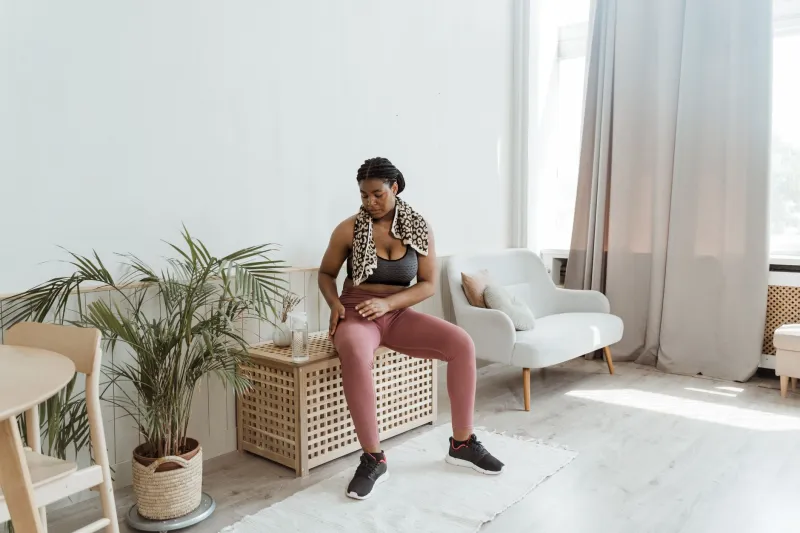
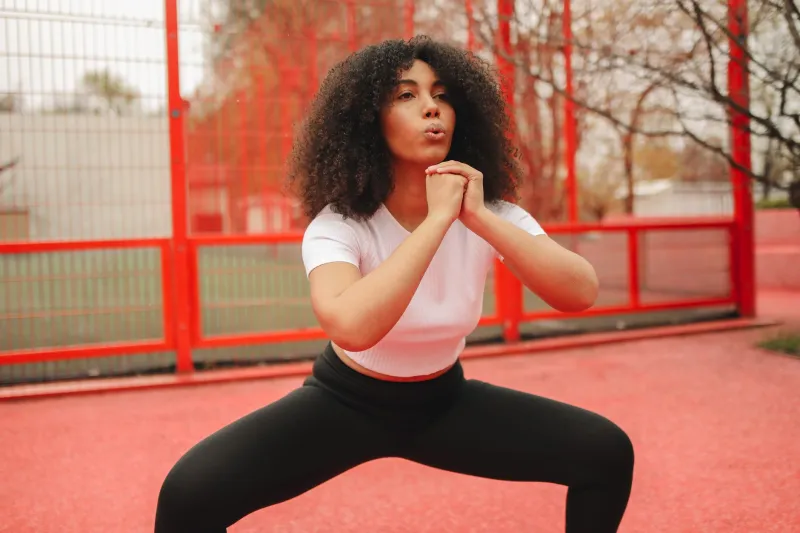
Work with what you actually have, not what the influencer has. A 15-minute bodyweight circuit in your living room during a lunch break is legitimate fitness. Walking your kids to school instead of driving counts. Movement doesn't require a studio, a trainer, or an hour you don't have.
Look for community-based resources. Many YMCAs offer sliding-scale memberships based on income. Community centers, church gyms, and park district programs often have free or low-cost fitness classes that don't require a credit card and a leap of faith. Organizations like Girls Trek and local running clubs specifically designed for women of color are building the kind of community that makes showing up easier.
Batch your movement. Can't carve out a dedicated workout block? Stack movement into what you're already doing — calf raises while you're cooking, stretching while you're watching TV with the kids, resistance bands at your desk. It's not ideal, but it's real, and real always beats perfect.
Reject the guilt as a systemic tool. The wellness industry profits from making you feel like you're failing. Every time you feel guilty for not doing more, ask yourself: who benefits from me believing this is my fault? The answer is never you.
Advocate for your neighborhood. Local parks, sidewalks, and recreational facilities are political issues. City budget decisions, zoning laws, and community investment directly impact your ability to move your body safely. Showing up to a city council meeting or supporting local advocacy organizations is, genuinely, a health act.
You Were Never the Problem
The fitness industry loves a bootstrap story — the woman who woke up at 4 AM, sacrificed everything, and transformed herself through sheer grit. What those stories never mention is the infrastructure of support behind that grit: the safe neighborhood, the flexible job, the partner sharing the childcare load, the generational wealth that makes a gym membership a non-decision.
You are not failing at fitness. The system was designed with someone else in mind, and it's charging you extra for the privilege of working within it anyway.
Knowing that doesn't make the barriers disappear. But it does mean you can stop spending your limited energy on shame — and redirect it toward the things that actually move you forward.
You deserve to be well. Not when the conditions are perfect. Right now, exactly as your life is.