When the Sun Clocks Out Early: Navigating Seasonal Depression and Staying Connected to Your Body
Nobody tells you that winter is going to feel like a betrayal.
One day it's still warm enough for a walk after dinner, and then suddenly it's dark by 5 PM, the air is sharp, your motivation has gone completely offline, and getting up to do anything feels like moving through wet concrete. If you're nodding along right now, you're not alone — and you're not dramatic.
Seasonal Affective Disorder, or SAD, is a legitimate, clinically recognized form of depression that follows a seasonal pattern, most commonly appearing in fall and winter and lifting in spring. It affects an estimated 10 million Americans, with millions more experiencing a milder version sometimes called the "winter blues." And while it doesn't discriminate by race, the way it shows up — and the way it gets treated, or doesn't — absolutely does.
Why This Hits Different for Women of Color
Here's something that doesn't get discussed nearly enough: melanin, the pigment that gives our skin its beautiful depth and richness, also affects how our bodies produce vitamin D from sunlight. The more melanin you have, the more sun exposure you need to synthesize the same amount of vitamin D as someone with lighter skin.
In the US, where winter means shorter days and weaker sun angles — especially if you're living north of Atlanta — Black, Brown, and Indigenous women are at significantly higher risk for vitamin D deficiency during the colder months. And vitamin D deficiency is directly linked to depression, fatigue, immune suppression, and mood dysregulation. This is not a coincidence. This is biology intersecting with geography and history in ways that affect our mental health every single year.
And then there's the cultural piece, which science doesn't always capture but which every woman of color reading this will feel in her bones.
Many of us grew up in households where depression wasn't really named. Where being sad for "no reason" was met with scripture, or a reminder of how much worse things could be, or a gentle but firm suggestion to keep it moving. The idea that the weather could make you depressed — that you could need help managing your mood during winter — can feel like weakness, indulgence, or ingratitude when you've been raised to be grateful just for surviving.
That cultural silence doesn't make SAD less real. It just makes it lonelier.
The Pressure to Stay Radiant When You're Running on Empty
There's a particular kind of exhaustion that comes from feeling like you have to perform okayness when you are very much not okay.
For women of color — especially Black women, who are so often cast in the role of the strong one, the resilient one, the one who holds everything together — admitting that winter has knocked you flat can feel like a personal failure. Social media doesn't help. The curated highlight reels of other women looking glowing and productive and put-together in their coordinated workout sets create a comparison trap that's brutal any time of year, but especially brutal when you're already struggling to get dressed.
The pressure to appear constantly grateful and energized is its own kind of violence, and it needs to be named as such.
You are allowed to be tired. You are allowed to be affected by the season. You are allowed to struggle without it meaning you're not strong enough.
What the Science Actually Says About Movement and SAD
Here's the complicated truth: movement genuinely helps with seasonal depression. Not because fitness is a cure-all or because you should just push through it, but because the research is clear that physical activity influences the same neurochemical pathways — serotonin, dopamine, endorphins — that SAD disrupts.
A study published in the American Journal of Preventive Medicine found that regular physical activity was associated with significantly lower rates of depression, with even modest amounts making a measurable difference. And crucially, the type of movement matters less than the consistency.
But here's where mainstream wellness advice gets it wrong: it usually responds to seasonal depression with intensity. More workouts. Harder sessions. Boot camp your way out of the darkness. That approach doesn't just miss the point — it can actively backfire when your nervous system is already depleted.
When you're in the depths of SAD, the bar for movement needs to come way, way down.
Movement That Meets You Where You Actually Are
Gentle doesn't mean ineffective. Accessible doesn't mean easy. And on the days when getting off the couch is a genuine victory, that victory counts.
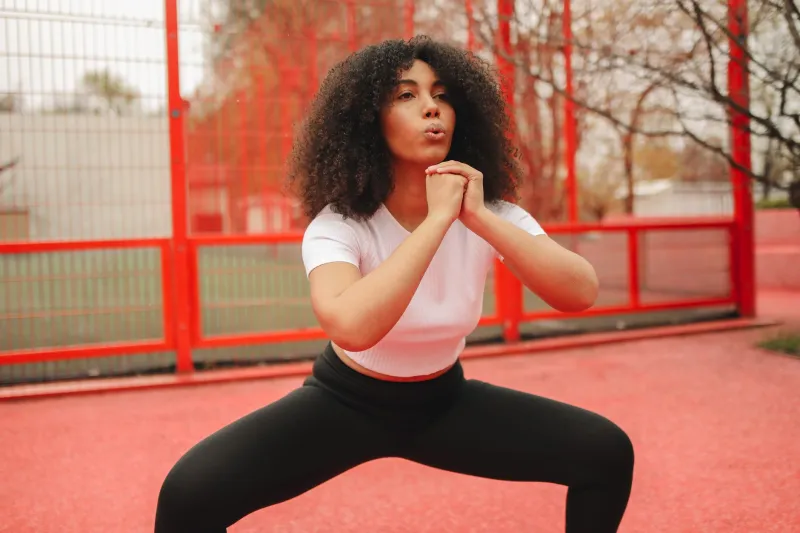
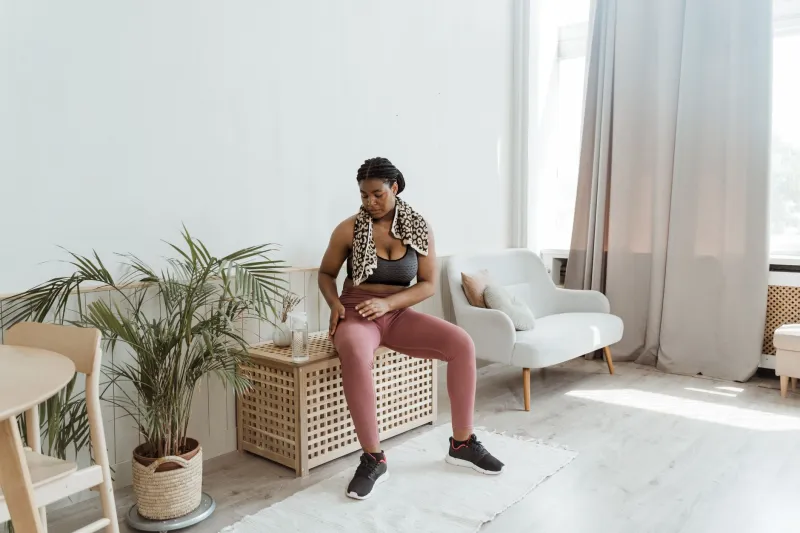
Start with five minutes. Not as a gateway to a longer workout, but as a complete act in itself. Five minutes of stretching in your bedroom. Five minutes of dancing in your kitchen while your coffee brews. Five minutes of slow walking around the block. The goal isn't performance — it's maintaining a thread of connection to your body when depression is trying to sever it.
Prioritize daylight, even if it's cold. Get outside within an hour of waking up, even if it's just to stand on your porch for a few minutes. Morning light exposure is one of the most evidence-backed interventions for SAD because it directly influences your circadian rhythm and melatonin production. You don't need to hike. You need to see the sky.
Consider a light therapy lamp. Light boxes that mimic natural sunlight have strong clinical evidence behind them for treating SAD. They're available on Amazon for as little as $30 to $60 and can be used while you're drinking your morning coffee or doing your skincare routine. This is a low-effort, high-impact tool that doesn't get talked about enough in communities of color.
Move with people when you can. Isolation makes seasonal depression worse. If you have a friend, a cousin, a coworker who'd be down for a slow walk or a YouTube yoga video over video call, that social connection amplifies the mood benefit of the movement. Community is medicine.
Give yourself permission to scale back. If your regular workout routine feels impossible right now, it's okay to let it be impossible for a season. Maintaining a lighter version of your movement practice — even just stretching and short walks — is not failure. It's intelligent adaptation.
Rest Is Also a Season
Nature doesn't hustle through winter. Trees don't apologize for losing their leaves. Bears don't feel guilty about hibernating. The natural world understands that rest is not the opposite of vitality — it's part of the cycle.
We were not designed to maintain summer-level output in December. The pressure to do so is a capitalist construct, not a biological requirement. And for women of color, who are already navigating systems that demand they give more and ask for less, the winter slowdown can actually be an invitation to practice something radical: doing less, on purpose, without shame.
Rest is not laziness. Rest is the season before the bloom.
If It's More Than the Winter Blues
If what you're experiencing feels like more than seasonal sluggishness — if you're struggling to function, feeling hopeless, withdrawing from everyone you love, or having thoughts of self-harm — please reach out for support. The Substance Abuse and Mental Health Services Administration (SAMHSA) helpline is free, confidential, and available 24/7 at 1-800-662-4357. The 988 Suicide and Crisis Lifeline is available by phone or text.
You deserve care that takes your whole experience seriously, including the cultural context that shapes how you experience and express distress. Therapists of color who specialize in depression are out there — directories like Therapy for Black Girls, Latinx Therapy, and the National Queer and Trans Therapists of Color Network can help you find someone who actually gets it.
Winter ends. And you deserve to still be here when it does.