Your Abuela's Kitchen Was Never the Enemy: Taking Back Cultural Food From Diet Culture's Grip
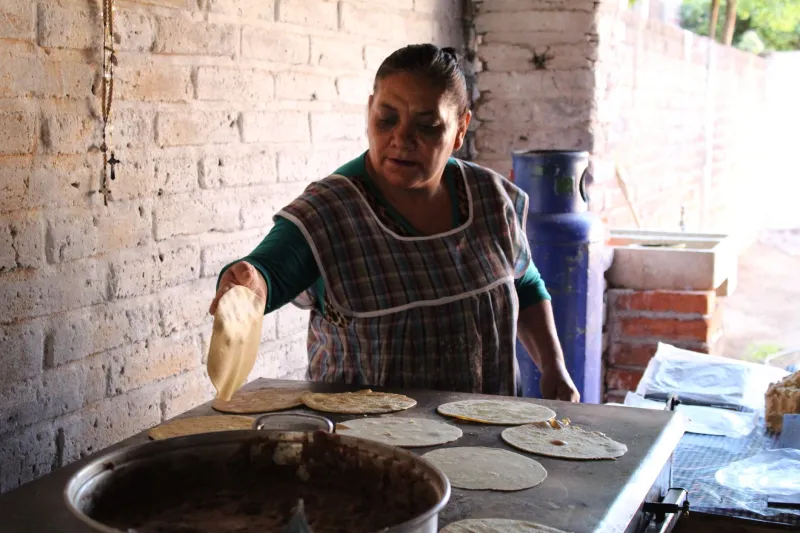
There's a particular kind of shame that lives in the body — not in your muscles or your fat or your skin, but somewhere deeper. In the pause before you say yes to seconds at the family cookout. In the mental math you do before you eat your grandmother's rice and beans. In the way you've learned to apologize for what's on your plate.
That shame didn't come from nowhere. It was installed, deliberately and systematically, by a diet culture industry worth over $70 billion annually in the United States — an industry that needed you to believe your food was the problem so it could sell you the solution.
And for women of color, that message didn't just target our bodies. It targeted our cultures, our families, our heritage, and our joy.
How Diet Culture Came for Our Tables
Let's trace this back, because history matters here.
The wellness and diet industries as we know them today were built on a foundation of white, Western nutritional standards that treated European dietary patterns as the default — and everything else as deviation. When researchers in the mid-twentieth century began publishing dietary guidelines that would eventually influence national policy, the data they drew from was overwhelmingly gathered from white male subjects. The foods that anchored those guidelines — lean proteins, dairy, refined grains — reflected a particular cultural context, not a universal nutritional truth.
Everything outside that narrow frame got pathologized.
Soul food — the ingenious culinary tradition Black Americans built from the scraps and castoffs of enslavement, transforming what was given to survive into something rich with flavor and meaning — got labeled as inherently unhealthy, associated with the very health disparities that were actually caused by poverty, stress, and lack of healthcare access.
Mexican and Central American food, built on the ancient nutritional foundation of corn, beans, squash, and chile, got reduced to "heavy" or "fattening" in the American wellness imagination — even as those same ingredients were quietly rebranded as superfoods when white wellness brands started selling them in powders and supplements.
Asian cuisines — vast, diverse, and spanning thousands of years of nutritional wisdom — got flattened into either "light and clean" or "too much sodium," depending on which stereotype was convenient.
Indigenous food traditions, which sustained entire civilizations in harmony with local ecosystems for generations, were disrupted by colonization and then blamed for the health consequences of that disruption.
The pattern is consistent: our food was never actually the problem. The problem was who got to define what "healthy" meant — and who benefited when we believed we needed to eat differently to be worthy.
The Guilt Is Not Yours — But the Healing Can Be
If you've ever felt conflicted eating your culture's food, that conflict is not a sign of weakness or poor willpower. It is the predictable result of decades of messaging designed to make you feel exactly that way.
Diet culture is particularly insidious because it doesn't announce itself as a system of control. It presents itself as health information, as science, as care. It shows up in well-meaning doctors' offices where a Latinx woman's arroz con pollo gets flagged before her blood pressure medication does. It shows up in the Weight Watchers points system, where a tamale costs more than a plain chicken breast. It shows up in the fitness influencer who posts about "cleaning up" her diet by eliminating "processed foods" — a category that somehow always manages to include the fermented, smoked, and preserved foods that are central to non-European culinary traditions, while leaving artisanal charcuterie boards untouched.
Recognizing the system doesn't automatically dissolve the shame. But it does give you somewhere to put the blame that isn't your body or your family's table.
What's Actually in the Food They Told You to Fear
Let's spend a moment in the actual nutritional reality of foods that diet culture demonized.
Beans and legumes — central to Black American, Latinx, South Asian, and many other food traditions — are among the most nutrient-dense foods on the planet. High in protein, fiber, iron, and folate, they are associated with lower rates of heart disease, diabetes, and certain cancers. The blue zones research, which examines the dietary patterns of the world's longest-lived populations, found that legumes were a near-universal staple across every single region studied.
Rice, dismissed as "empty carbs" by low-carb diet culture, has been a foundational food for billions of people across Asia, Africa, the Caribbean, and Latin America for thousands of years. When consumed as part of a balanced meal — which is how it is traditionally eaten — it provides sustained energy and, in whole grain forms, meaningful fiber and micronutrients.
Plantains, yams, and root vegetables were labeled as high-glycemic dangers by diet culture, yet they are complex carbohydrates rich in potassium, vitamin C, and resistant starch that feeds beneficial gut bacteria.
Pork and offal — the basis of so much soul food, so much Caribbean cuisine, so much Indigenous cooking — were demonized by a wellness culture that conveniently forgot that the same European traditions it elevated also include charcuterie, prosciutto, and pâté.
The food was never the problem. The framing was.
Eating Your Culture Without the Commentary in Your Head
Uninstalling diet culture's programming is not a one-meal process. The guilt that gets activated when you eat certain foods has often been reinforced over years, sometimes decades. But there are ways to start loosening its grip.
Reconnect with the story of the food. Before you eat your grandmother's oxtail or your mom's biryani or your auntie's fry bread, take a moment to think about what that dish represents — where it came from, who made it, what it survived, what it's carrying. Food is never just macros. It's memory and migration and love and resilience. Let yourself receive all of it.
Practice eating without labels. "Good food" and "bad food" are diet culture constructs that have no nutritional basis. Food is food. Some foods are more nutrient-dense than others, yes, but no single food eaten in a single meal has the power to harm or heal you. What harms us is the chronic stress of guilt and restriction — and that is fully within your power to address.
Cook with intention rather than subtraction. If you want to explore how to make traditional dishes that support your specific health needs — whether that's managing blood pressure, blood sugar, or anything else — the answer is usually addition, not elimination. More vegetables alongside the rice. More herbs and aromatics. More of the traditional cooking methods that were stripped away when processed food became accessible. Work with the food, not against it.
Find practitioners who respect your culture. If your healthcare provider is telling you to eliminate your cultural foods without understanding the context of how and why you eat them, that is not comprehensive care. Registered dietitians who specialize in culturally affirming nutrition are out there — they exist and they will not make you feel like your heritage is a liability.
Let pleasure be part of the equation. The joy of eating — real, unguarded, uncalculated joy — is not frivolous. Research on eating behavior consistently shows that satisfaction and pleasure are functional parts of healthy eating. When we eat food we love, in community with people we love, our bodies receive it differently than when we eat in guilt and restriction. Permission to enjoy your food is not a cheat. It is, in fact, the point.
The Table Is Sacred
Food has always been more than fuel. It is how we mark celebrations, how we grieve, how we welcome strangers, how we keep our grandparents alive after they're gone. The table is where our cultures live and breathe and get passed down.
Diet culture tried to make that table a place of anxiety and accounting. It tried to turn one of the most fundamentally human acts — sharing food with the people you love — into a transaction where you had to earn your plate.
You don't have to earn your plate. You never did.
Your abuela's kitchen was not the enemy. It was the sanctuary. And you are allowed to walk back in.